What is Japanese Culture Like? A Comprehensive Guide
Table of Contents
Discover the essence of Japanese culture, from ancient traditions to modern trends. Learn what makes Japan unique.
Kenji Sato
Verified ExpertJapanese Language Specialist (JLPT N2) | Manga Critic since 2018 | 10,000+ Translations Reviewed
Published: 2025-11-28
View Credentials & Review Process →Japanese culture is a rich tapestry woven from thousands of years of history, blending ancient traditions with cutting-edge modernity. To understand "what is Japanese culture like," one must look at the core values that shape society: harmony (wa), respect (rei), and purity.
Harmony and Respect: The Foundation
At the heart of Japanese interactions is the concept of 'Wa' (Harmony). This drives the polite behavior, the bowing, and the indirect communication style often observed. It's about maintaining peace and avoiding conflict within the group.
The Art of Bowing (Ojigi)
Bowing is an essential part of Japanese etiquette, used for greetings, apologies, and showing respect.
- Eshaku (15°): A slight bow for casual greetings or acknowledging someone.
- Keirei (30°): The most common bow, used for business interactions and entering/leaving a room.
- Saikeirei (45°): A deep bow used for profound apologies, deep gratitude, or showing respect to VIPs.
Keigo: The Language of Respect
The Japanese language itself changes based on who you are talking to. Keigo (honorifics) is used to show respect to elders, customers, and superiors. It involves using specific verb forms and vocabulary to humble oneself (Kenjougo) and elevate the listener (Sonkeigo).
👉 Related: How Old is Japanese Culture?
Tradition vs. Modernity: A Seamless Blend
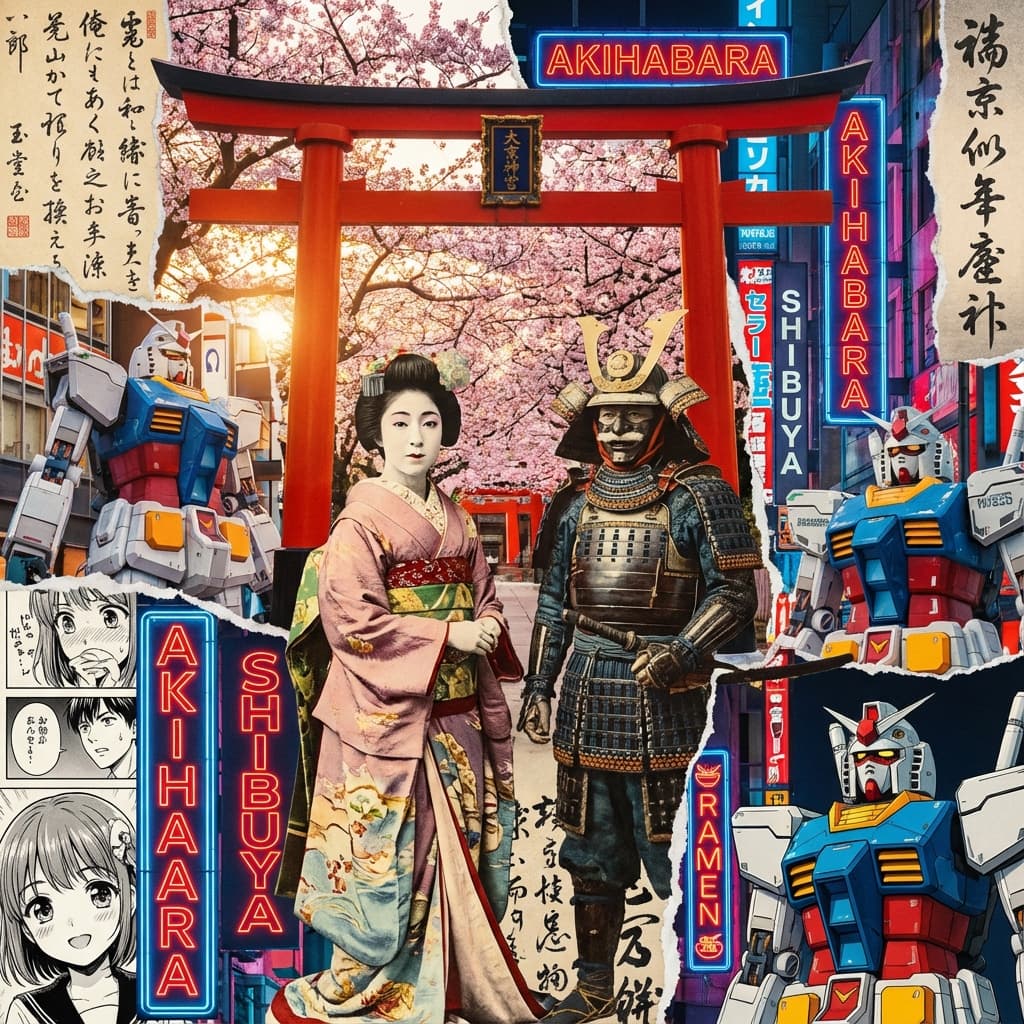
Japan is a land of contrasts where the old and new coexist in a unique harmony. You can find a 1000-year-old Shinto shrine nestled between neon-lit skyscrapers in Tokyo.
Traditional Arts
- Sado (Tea Ceremony): A meditative ritual of preparing matcha, focusing on mindfulness and hospitality.
- Ikebana (Flower Arranging): An art form that emphasizes line, shape, and minimalism.
- Kabuki & Noh: Traditional forms of theater that have been performed for centuries.
Modern Pop Culture
On the flip side, Japan is a global powerhouse of pop culture. Anime and Manga are consumed worldwide, influencing fashion, film, and art. The gaming industry (Nintendo, Sony) has defined entertainment for generations.
Nature and Seasons
A deep appreciation for nature is fundamental to the Japanese psyche. The changing seasons are celebrated with festivals (Matsuri) and specific foods.
- Spring: Cherry blossom viewing (Hanami) is a national pastime where people gather under blooming trees to eat and drink.
- Summer: Fireworks festivals (Hanabi) and Obon dances honor ancestors.
- Autumn: Viewing colorful autumn leaves (Koyo) is a popular activity.
- Winter: Snow festivals and enjoying hot pot dishes (Nabe).
Cuisine (Washoku)
Japanese food, or Washoku, is recognized by UNESCO as an Intangible Cultural Heritage. It emphasizes seasonal ingredients, presentation, and natural flavors.
- Sushi & Sashimi: Fresh raw fish served with rice.
- Ramen: Diverse noodle soups that vary by region (Miso, Shoyu, Tonkotsu).
- Kaiseki: A traditional multi-course meal that is the pinnacle of Japanese fine dining.
- Izakaya Culture: Casual gastropubs where friends and coworkers gather to share small plates and drinks.
👉 Culture: What is Japanese Culture Like?
Expert writer on Japanese culture and anime trends.
