How Old is Japanese Culture? Tracing the Origins
Table of Contents
Delve into the history of Japan. How old is Japanese culture really? We explore the timeline from Jomon to modern day.
Hiroshi Yamamoto
Verified ExpertJapanese Language Specialist (JLPT N2) | Manga Critic since 2018 | 10,000+ Translations Reviewed
Published: 2025-11-25
View Credentials & Review Process →When asking "how old is Japanese culture," we must look back thousands of years. The Japanese archipelago has been inhabited since the Paleolithic era (over 30,000 years ago), but distinct culture began to emerge significantly later.
Jomon Period (c. 14,000–300 BCE): The Dawn of Culture
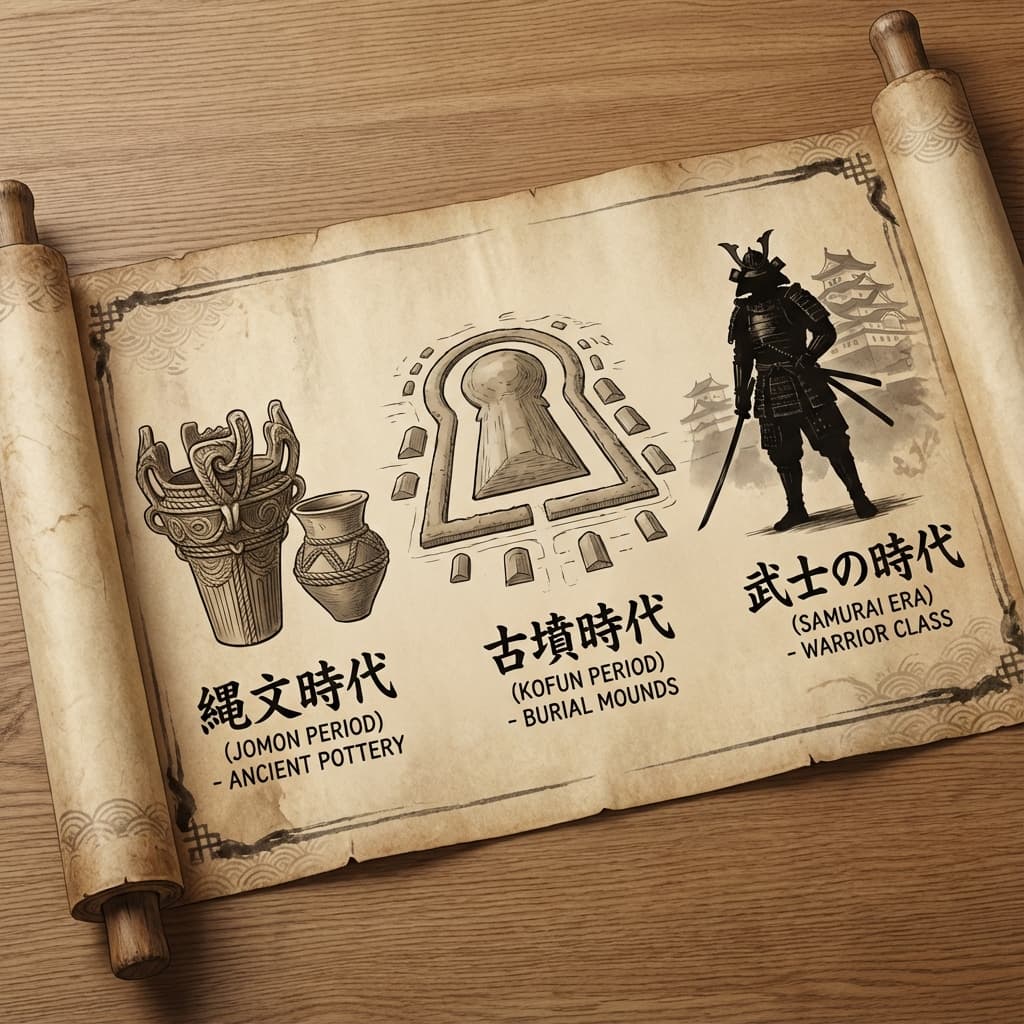
Named after the "cord-marked" pottery found from this era, the Jomon Period represents the earliest distinct culture.
- Hunter-Gatherers: They lived in pit dwellings and relied on hunting, fishing, and gathering.
- Pottery: Jomon pottery is among the oldest in the world, known for its elaborate rope-pattern decorations.
- Spirituality: Clay figurines called Dogu suggest early religious or magical practices.
Yayoi Period (300 BCE–300 CE): Agriculture and Metal
This era marked a massive shift with the introduction of wet-rice cultivation and metalworking (bronze and iron) from the Asian continent.
- Settlements: Permanent farming villages were established.
- Social Hierarchy: The accumulation of wealth led to the emergence of social classes.
👉 Overview: What is Japanese Culture Like?
Kofun Period (300–538 CE): The Rise of Yamato
Named after the massive keyhole-shaped burial mounds (Kofun) built for leaders. This period saw the rise of the Yamato clan, which eventually established the Imperial line that continues today.
Asuka and Nara Periods (538–794 CE): Classical Japan
This is a pivotal era where "Japanese culture" as a high culture began to flourish, heavily influenced by China.
👉 Overview: What is Japanese Culture Like?
- Buddhism: Introduced in 538 CE, it profoundly impacted art, architecture, and philosophy.
- Writing: The adoption of Chinese characters (Kanji) allowed for the recording of history and literature.
- Government: A centralized government based on the Chinese model was established.
Heian Period (794–1185): The Golden Age
Considered the peak of the Japanese imperial court.
- Art & Literature: This era gave birth to The Tale of Genji by Murasaki Shikibu, the world's first novel.
- Aesthetics: The concept of Miyabi (courtly elegance) defined the era.
The Samurai Era (1185–1868)
From the Kamakura to the Edo period, the warrior class (Samurai) ruled Japan. This era solidified the code of Bushido, tea ceremony, and Zen Buddhism as core cultural pillars.
So, how old is it? While people have lived there for millennia, the recognizable roots of modern Japanese culture—rice, Buddhism, tea, and imperial rule—are about 1,500 to 2,000 years old.
Expert writer on Japanese culture and anime trends.