Japanese to English Translation: The Ultimate Guide to Tips, Tricks, and Nuance
Table of Contents
Mastering Japanese to English translation requires more than just vocabulary. Dive into this comprehensive 1000+ word guide on grammar, context, and the art of localization.
Mike Ross
Verified ExpertJapanese Language Specialist (JLPT N2) | Manga Critic since 2018 | 10,000+ Translations Reviewed
Published: 2025-11-24
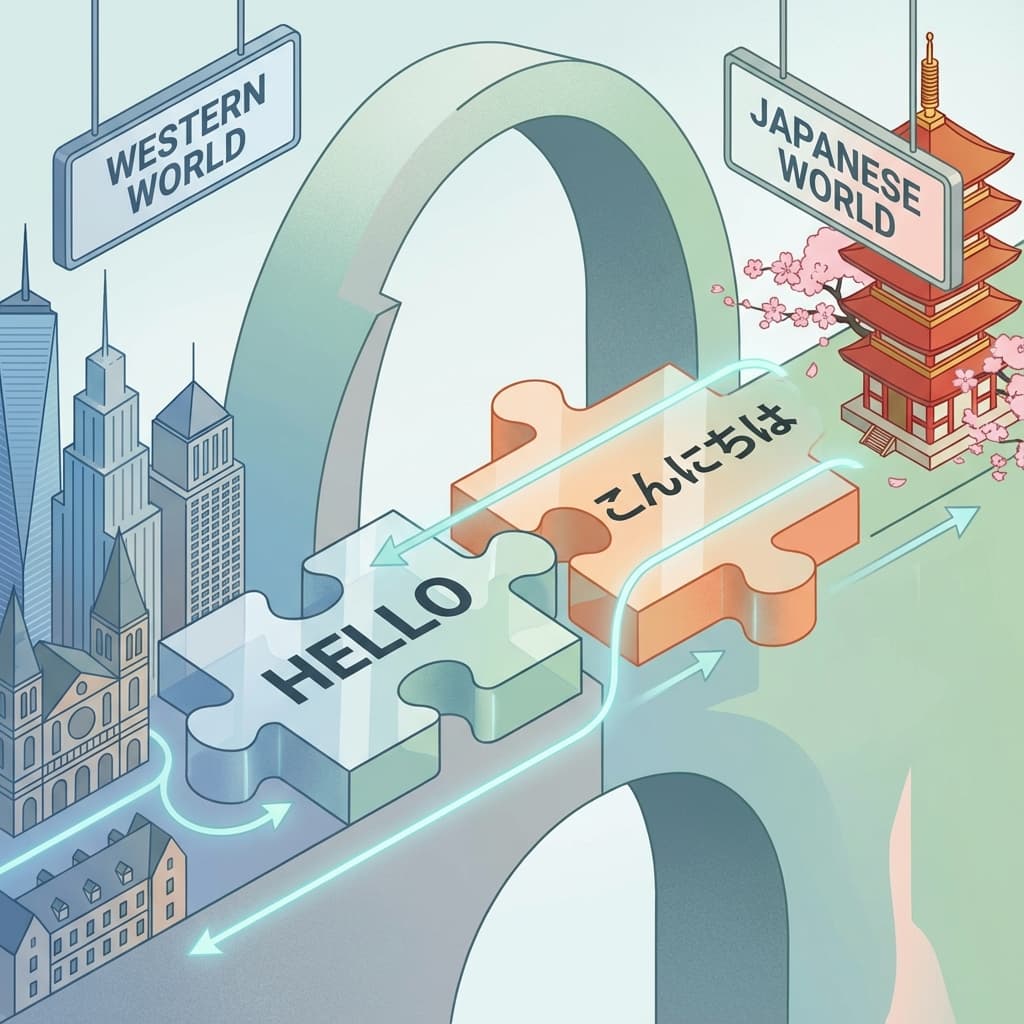
View Credentials & Review Process →Translating from Japanese to English is often cited as one of the most difficult linguistic challenges in the world. It is not simply a matter of swapping word A for word B; it is an act of bridging two fundamentally different ways of thinking, structuring information, and viewing the world.
Whether you are a student trying to translate manga, a business professional handling emails, or an aspiring translator, this comprehensive guide will explore the depths of Japanese-to-English translation, offering actionable tips, deep grammatical insights, and professional tricks to elevate your work.
Part 1: The Fundamental Divide
To understand how to translate well, you must first understand why it is so hard. The distance between English and Japanese is vast, arguably wider than between English and almost any European language.
1. Structure: SOV vs. SVO
- English follows a Subject-Verb-Object (SVO) order: "I (S) ate (V) an apple (O)."
- Japanese follows a Subject-Object-Verb (SOV) order: "Watashi wa (S) ringo wo (O) tabemashita (V)."
The Translation Challenge: In long, complex sentences, the verb—the most critical part of the action—comes at the very end in Japanese. As a translator, you often have to read the entire sentence (or paragraph!) before you can even begin to write the English sentence. You cannot translate linearly.
Pro Tip: Don't translate word-for-word. Read the whole sentence, find the main verb at the end, identify the subject (which is often hidden), and then reconstruct the sentence in English order. Think of it as decoding a puzzle: find the anchor (the verb) first.
2. High-Context vs. Low-Context
- English is a Low-Context language. We like to be explicit. "I am going to the store." "He likes her."
- Japanese is a High-Context language. Much of the information is implied and left unsaid.
- Japanese: "Kaimono ni iku." (Going shopping.) -> Who is going? When?
- Japanese: "Suki da." (Like.) -> Who likes whom?
The Translation Challenge: You must become a detective. You have to infer the missing subjects and objects based on the previous sentences, the speaker's status, and the situation.
Pro Tip: If the subject is missing, look at the verb ending. Honorifics (irassharu) imply someone else (a superior). Humble forms (mairu) imply the speaker. If it's a plain verb, check the previous sentence's topic.
👉 Avoid Mistakes: English to Japanese: Common Mistakes to Avoid
Part 2: Grammar Pitfalls and How to Fix Them
1. The Passive Voice Trap
Japanese loves the passive voice (ukemi), often used to show that something happened to someone, sometimes with a nuance of suffering (meiwaku passive).
- Literal: "I was rained on." (Ame ni furareta)
- Natural English: "It rained on me" or "I got caught in the rain."
Fix: Don't be afraid to switch passive Japanese to active English. It often makes the translation punchier and more natural.
2. The Causative Nightmare
The causative form (saseru) means "to make/let someone do something."
- Literal: "He made me eat vegetables."
- Nuance: Depending on context, it could mean "He allowed me to eat" or "He forced me to eat."
Fix: Look at the helping verbs. Sasete kudasai (Please let me do it) is a polite request, not a demand. Translate the intent, not just the grammar.
3. Nominalization (No/Koto)
Japanese often turns verbs into nouns using no or koto.
- Japanese: "Taberu no ga suki." (Eating is liked.)
- English: "I like eating."
Fix: English prefers verbs. If the Japanese sentence is heavy on nouns (koto), try to unpack it into a verbal phrase in English for better flow.
Part 3: The Art of Nuance and Vocabulary
1. Untranslatable Words
Some words just don't have an English equivalent.
- Mottainai: A sense of regret concerning waste. "What a waste" doesn't quite capture the spiritual aspect of respecting the object.
- Yoroshiku onegaishimasu: The Swiss Army knife of Japanese. It can mean "Nice to meet you," "Please help me," "I'm counting on you," or "Best regards."
- Translation Trick: Context is everything.
- Introduction: "Nice to meet you."
- Email closing: "Best regards."
- Handing over a task: "Thanks in advance."
2. Wasei-Eigo (Made-in-Japan English)
Be careful with "English" words used in Japanese. They often mean something different.
- Mansion (Manshon): In English, a huge luxury estate. In Japanese, a standard concrete apartment/condo.
- Claim (Kureemu): In English, to state a fact. In Japanese, a customer complaint.
- Smart (Sumaato): In English, intelligent. In Japanese, slim/stylish.
Pro Tip: Never assume a Katakana word means the same thing as its English origin. Always double-check.
3. Onomatopoeia (Giongo/Gitaigo)
Japanese has thousands of sound symbolism words.
- Pika-pika: Sparkly/shiny.
- Gara-gara: Empty/rattling.
- Shiin: The sound of silence.
Fix: English doesn't use onomatopoeia as much in formal writing. Instead of "The floor was pika-pika," translate it as "The floor was gleaming" or "spotless." Use descriptive adjectives instead of sound words.
Part 4: Localization vs. Translation
This is where a good translator becomes a great one. Translation is converting words. Localization is converting the experience.
1. Cultural Equivalents
- Japanese: "He is like a Tengu." (Long-nosed goblin, implies arrogance.)
- Literal: "He is a goblin." (Confusing for English speakers.)
- Localized: "He is so full of himself" or "He has a big head."
2. Idioms and Proverbs
- Japanese: "Saru mo ki kara ochiru." (Even monkeys fall from trees.)
- Literal: Monkeys fall...
- Localized: "Everyone makes mistakes" or "Nobody's perfect."
Pro Tip: Unless you are writing a footnote-heavy academic paper, always choose the localized idiom that conveys the meaning instantly to the English reader.
3. Politeness Levels (Keigo)
Japanese has strict hierarchy (Sonkeigo, Kenjougo, Teineigo). English is more egalitarian.
- Japanese: "Shachou ga irasshaimashita." (The CEO honorably arrived.)
- Bad Translation: "The CEO has honorably come."
- Good Translation: "The CEO has arrived." (Maybe add "Mr./Ms." to show respect).
Fix: You can't translate Keigo directly. Instead, use "Register" – the tone of the English. Use formal words ("requested" instead of "asked," "apologize" instead of "sorry") to convey the politeness.
Part 5: Tools of the Trade
No translator works in a vacuum. Here are the essential tools you need.
1. Dictionaries
- Jisho.org: The gold standard for quick lookups. Great for breaking down Kanji.
- Eijiro on the Web (ALC): Fantastic for phrases and idioms. It shows words in context, which is crucial.
- Weblio: Good for more obscure or technical terms.
2. Context Search
- Google Images: Not sure what a specific Japanese fish or tool looks like? Image search it. Visual context is often better than a text definition.
- Twitter (X): Want to know how a slang word is actually used by real people? Search it on Japanese Twitter.
3. Machine Translation (as a helper, not a replacement)
- DeepL: Currently the best AI for Japanese-English. It captures nuance better than Google Translate.
- ChatGPT/Claude: Excellent for "rubber ducking." You can ask, "What is the nuance of this phrase in this specific context?"
Warning: Never copy-paste AI output without verifying. It often hallucinates, especially with omitted subjects.
Part 6: Professional Advice for Aspiring Translators
1. Read More English
This sounds counter-intuitive, but to be a good J-to-E translator, your English writing skills are more important than your Japanese reading skills. You can look up a Japanese word, but you can't look up "how to write a beautiful English sentence." Read high-quality English literature, journalism, and essays.
2. Know Your Audience
- Legal/Medical: Accuracy is paramount. Do not deviate from the text.
- Marketing: Persuasion is paramount. You can rewrite the entire slogan if the literal translation is boring.
- Literature/Manga: Voice is paramount. Does the character sound like a tough guy? A shy girl? The translation must reflect their personality.
3. The "Sleep On It" Rule
When you stare at a translation for hours, you get "Translationese" – English that sounds like Japanese.
- Translationese: "As for the apple, I ate it."
- Natural: "I ate the apple."
Pro Tip: Always step away from your draft. Come back the next day and read only the English. Does it sound like something a human would actually say? If not, rewrite it.
Conclusion
Japanese to English translation is a lifelong journey of learning. It requires the precision of a scientist to decode the grammar and the soul of a poet to reconstruct the feeling.
Don't be discouraged by the difficulty. Embrace the ambiguity. The satisfaction of finding that perfect English word that captures the exact shade of meaning of a Japanese phrase is a feeling like no other. Keep practicing, keep reading, and remember: context is king.
Expert writer on Japanese culture and anime trends.