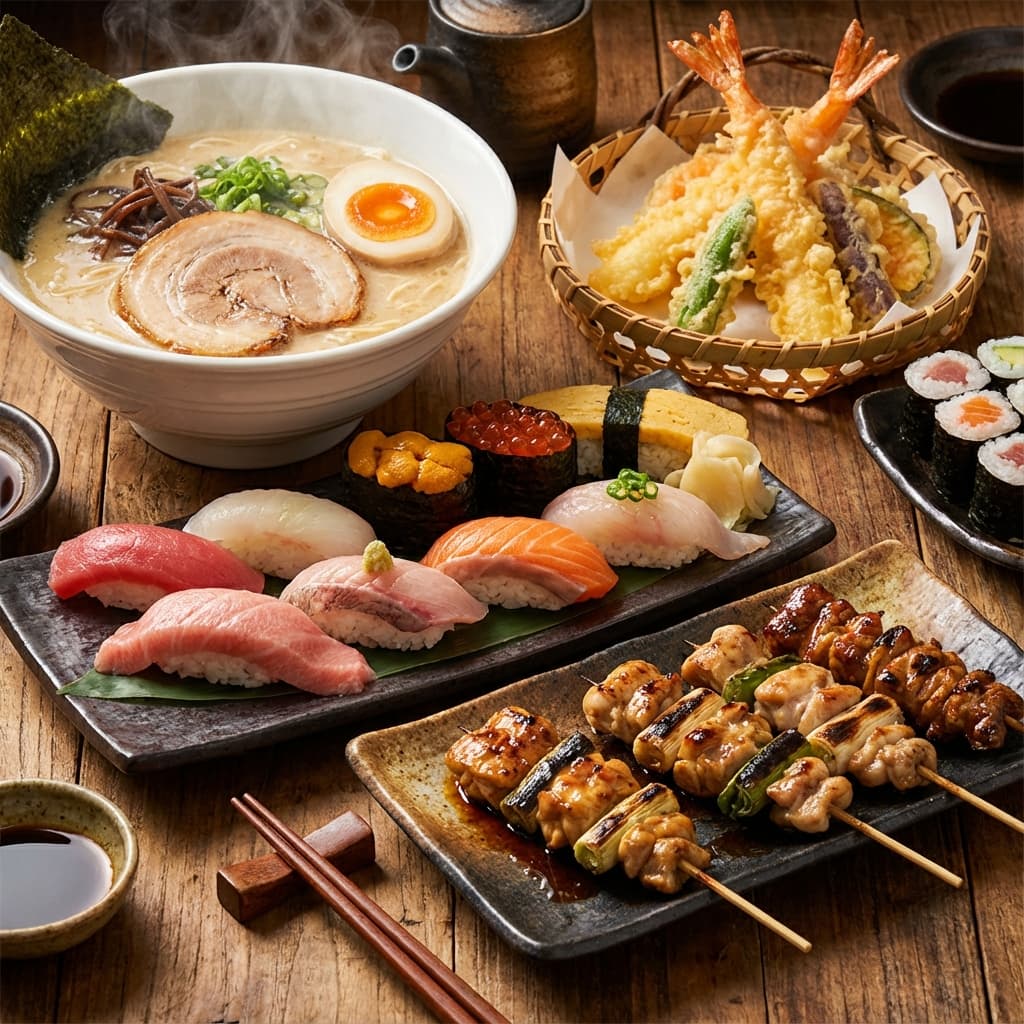
Japanese Food Near Me: The Ultimate Guide to Finding Authentic Cuisine
Table of Contents
Craving authentic Japanese food? Learn how to distinguish real gems from tourist traps, understand different restaurant types, and what to order.
Kenji Sato
Verified ExpertJapanese Language Specialist (JLPT N2) | Manga Critic since 2018 | 10,000+ Translations Reviewed
Published: 2025-11-22
View Credentials & Review Process →We have all been there. You crave the savory depth of Ramen or the fresh delicacy of Sushi, so you type "Japanese food near me" into Google Maps. The results are endless, but how do you know which ones are the real deal and which are overpriced tourist traps?
This guide will teach you how to be a Japanese food detective, helping you find authentic, delicious cuisine no matter where you are.
Part 1: Decoding the Restaurant Types
In the West, "Japanese Restaurant" often means a place that serves Sushi, Teriyaki, Tempura, and maybe even Thai curry all on one menu. In Japan, this almost never happens. Specialization is the mark of quality.
1. The Sushi-ya (Sushi Shop)
- What to expect: A focus strictly on raw fish and rice.
- Authenticity Check: Look for a counter (Itamae) where you can watch the chef. If the menu has "Cream Cheese" or "Spicy Mayo" on everything, it's "Fusion," not traditional.
- Pro Tip: Try the Omakase (Chef's Choice) for the best seasonal fish.
2. The Ramen-ya (Ramen Shop)
- What to expect: A fast-paced shop dedicated to noodle soup.
- Authenticity Check: A limited menu. A shop that does only Tonkotsu (pork bone) or only Miso is usually better than one that offers 20 different broths. Look for ticket machines at the entrance.
- The Slurp: Yes, you should slurp your noodles! It cools them down and aerates the broth.
3. The Izakaya (Japanese Gastropub)
- What to expect: The heart of Japanese social life. It's a casual place for drinking beer/sake and sharing small plates (Tapas style).
- The Menu: Yakitori (skewers), Karaage (fried chicken), Edamame, Sashimi, Grilled fish.
- Authenticity Check: It should be loud, lively, and possibly smoky. If it's dead silent, it's not a good Izakaya.
4. Kaiseki (Fine Dining)
- What to expect: A traditional multi-course meal that celebrates the seasons.
- The Experience: Tiny, artfully plated dishes. Quiet atmosphere. Impeccable service.
- Cost: Expensive, but worth it for the cultural experience.
5. Teppanyaki vs. Hibachi
- Clarification: In the US, "Hibachi" (cooking on a grill with a show) is popular. In Japan, this style is called Teppanyaki (iron griddle grilling) and is usually a high-end steak experience (like Kobe beef), not a onion-volcano show.
👉 Culture: What is Japanese Culture Like?
Part 2: How to Spot a Fake
When scrolling through your search results for "Japanese food near me," look for these red flags:
- The "Pan-Asian" Menu: If a place serves Sushi, Pad Thai, and General Tso's Chicken, it is not an authentic Japanese restaurant. It's a general Asian restaurant.
- The Name: Names like "Sumo Sushi," "Ninja Grill," or "Samurai Wok" are usually marketed towards Westerners. Authentic places often have names related to nature, the owner's name, or a specific region.
- The Rice: Look at photos of the sushi. Is the rice mashed together? Is there too much rice compared to the fish? Good sushi rice (Shari) should be distinct grains, slightly warm, and seasoned with vinegar.
Part 3: What to Order (Beyond the Basics)
Don't just stick to the California Roll. Be adventurous!
- Instead of Teriyaki Chicken: Try Yakitori (grilled chicken skewers) or Karaage (Japanese fried chicken).
- Instead of Miso Soup (as a side): Try Tonjiru (pork and vegetable miso soup), which is a hearty meal in itself.
- Instead of Ramen: Try Udon (thick wheat noodles) or Soba (buckwheat noodles).
- Comfort Food: Try Okonomiyaki (savory pancake), Katsudon (pork cutlet bowl), or Curry Rice (Japanese curry is sweeter and thicker than Indian curry).
Part 4: Dining Etiquette 101
If you find a truly authentic spot, impress the staff with your manners:
- Itadakimasu: Say this before you eat ("I humbly receive").
- Gochisousama deshita: Say this to the chef/staff when you leave ("It was a feast").
- Chopsticks: Never stick them vertically in your rice (resembles a funeral ritual). Never pass food from chopstick to chopstick.
- No Tipping: Authentic Japanese-run places in the West might still accept tips because of local custom, but in Japan, tipping is never done.
Conclusion
Finding the best "Japanese food near me" takes a little detective work, but the reward is a meal that transports you straight to Tokyo or Osaka. Look for specialization, check the menu for seasonal items, and don't be afraid to step out of your comfort zone. Itadakimasu!
Expert writer on Japanese culture and anime trends.