How to Say I Love You in Japanese: The Language of Romance
Table of Contents
Expressing love in Japanese can be subtle. Learn why "Aishiteru" is rarely used, how to confess your feelings (Kokuhaku), and the art of romantic communication.
Sarah Jenkins
Verified ExpertJapanese Language Specialist (JLPT N2) | Manga Critic since 2018 | 10,000+ Translations Reviewed
Published: 2025-11-21
View Credentials & Review Process →If you type "how to say i love you in japanese" into Google Translate, it will give you one word: "Aishiteru" (愛してる).
But if you say this to a Japanese person you just started dating, they might run away.
Japanese love language is famously subtle, indirect, and context-heavy. Using the wrong phrase can make you sound like a soap opera character—or worse, a stalker. This guide will teach you how to navigate the complex waters of Japanese romance.
Part 1: The "Aishiteru" Paradox
"Aishiteru" is the literal translation of "I love you." It is a beautiful, heavy, and profound word.
- The Problem: It is too heavy.
- Usage: It is reserved for life-altering moments. A marriage proposal, a deathbed farewell, or a scene in a dramatic movie.
- Reality: Many Japanese married couples go their entire lives without saying it to each other.
Part 2: The Magic Word: "Suki" (Like)
In Japan, "Like" is the new "Love."
1. Suki desu (好きです)
- Meaning: "I like you."
- Nuance: In a romantic context (between two people alone), this is the standard way to say "I love you." It implies romantic interest and affection without the overwhelming weight of "Aishiteru."
2. Daisuki desu (大好きです)
- Meaning: "I really like you" / "I love you."
- Nuance: This is the sweet spot. It's passionate, cute, and clear. You can use it with your boyfriend/girlfriend, your pet, or even your favorite food (Ramen ga daisuki!).
👉 Related: How to Say Hello in Japanese
Part 3: The Confession (Kokuhaku)
In the West, dating often happens organically. You hang out, you hook up, and eventually, you have "the talk." In Japan, there is a clear starting line: The Kokuhaku.
- What is it?: A formal declaration of feelings and a request to start a relationship.
- The Script:
- "Suki desu. Tsukiatte kudasai."
- (I like you. Please go out with me.)
- The Rule: Until the Kokuhaku happens, you are just friends. Even if you have gone on five dates. The Kokuhaku makes it official.
👉 Related: How to Say Hello in Japanese
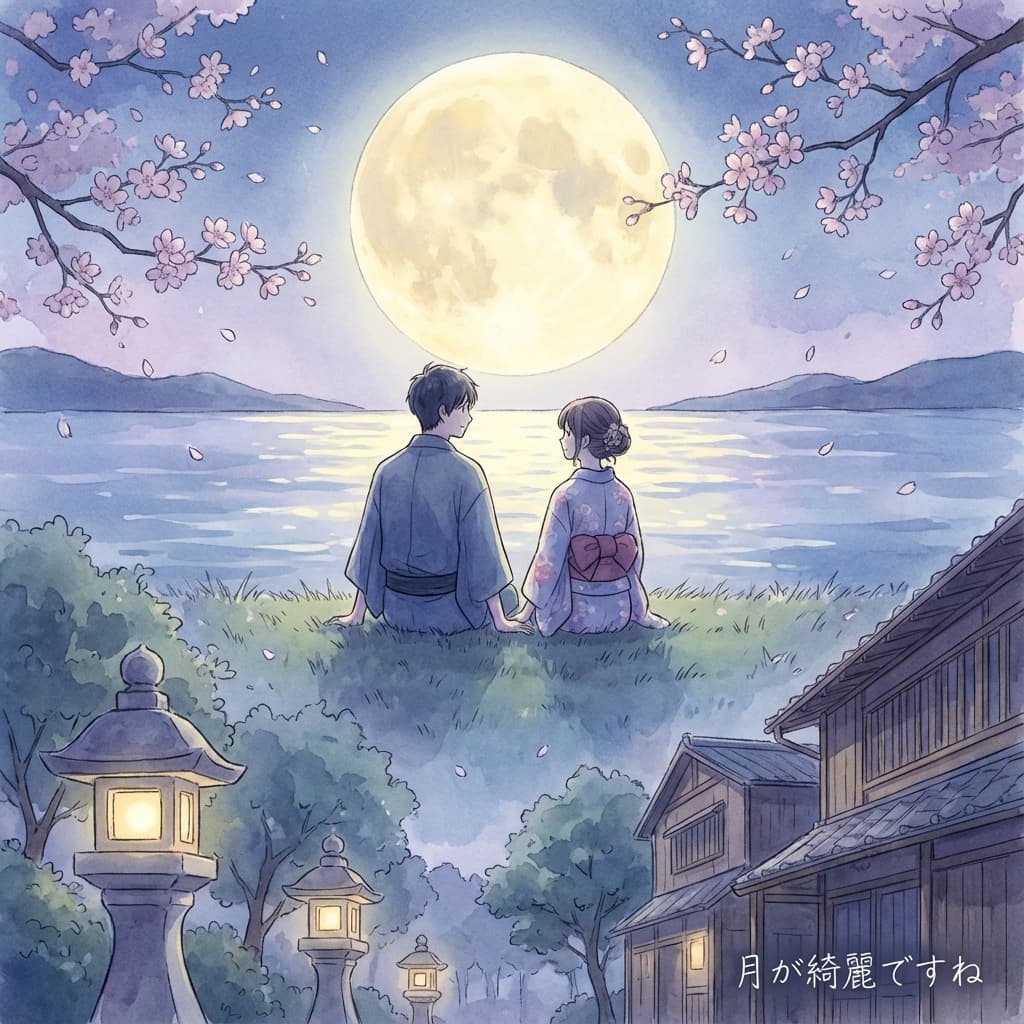
Part 4: "The Moon is Beautiful, Isn't It?"
There is a famous story about the novelist Natsume Soseki. When he was an English teacher, a student translated "I love you" as "Ware kimi wo aisu" (I love you). Soseki corrected him, saying: "Japanese people don't say that. Just translate it as 'The moon is beautiful, isn't it?' (Tsuki ga kirei desu ne)."
- Meaning: This phrase has become a literary, poetic way to say "I love you." It means, "We are looking at the same moon, sharing this moment, and that is enough."
- Modern Usage: It's a bit of a cliché now, but educated people will understand the reference.
Part 5: Dating Culture Differences
1. PDA (Public Displays of Affection)
- Japan: Holding hands is common. Hugging or kissing in public is rare and considered rude or embarrassing.
- Tip: Save the smooching for private moments.
2. Contact Frequency
- Japan: It is common for couples to text only once a day or even every few days. It doesn't mean they are losing interest; they just value personal space.
3. Who Pays?
- Old School: The man pays for everything.
- Modern: "Warikan" (splitting the bill) is becoming more common, especially among younger couples.
Part 6: Valentine's Day and White Day
Japan has a unique two-step system for Valentine's.
Feb 14th: Valentine's Day
- Who gives?: Only women give chocolate to men.
- Giri-Choco: "Obligation Chocolate" given to bosses and male coworkers. Cheap and polite.
- Honmei-Choco: "True Feeling Chocolate" given to the crush/boyfriend. Often expensive or handmade.
March 14th: White Day
- Who gives?: Men who received chocolate must return the favor to the women.
- The Rule: The return gift should be 2-3 times the value of the chocolate received (Sanbai-gaeshi).
Conclusion
So, how to say I love you in Japanese?
- Start with "Suki" (Like).
- Upgrade to "Daisuki" (Love/Big Like).
- Save "Aishiteru" for the altar.
And remember, in Japan, love is often shown through actions—making a bento, picking up a souvenir, or simply listening—rather than grand verbal declarations.
Expert writer on Japanese culture and anime trends.
