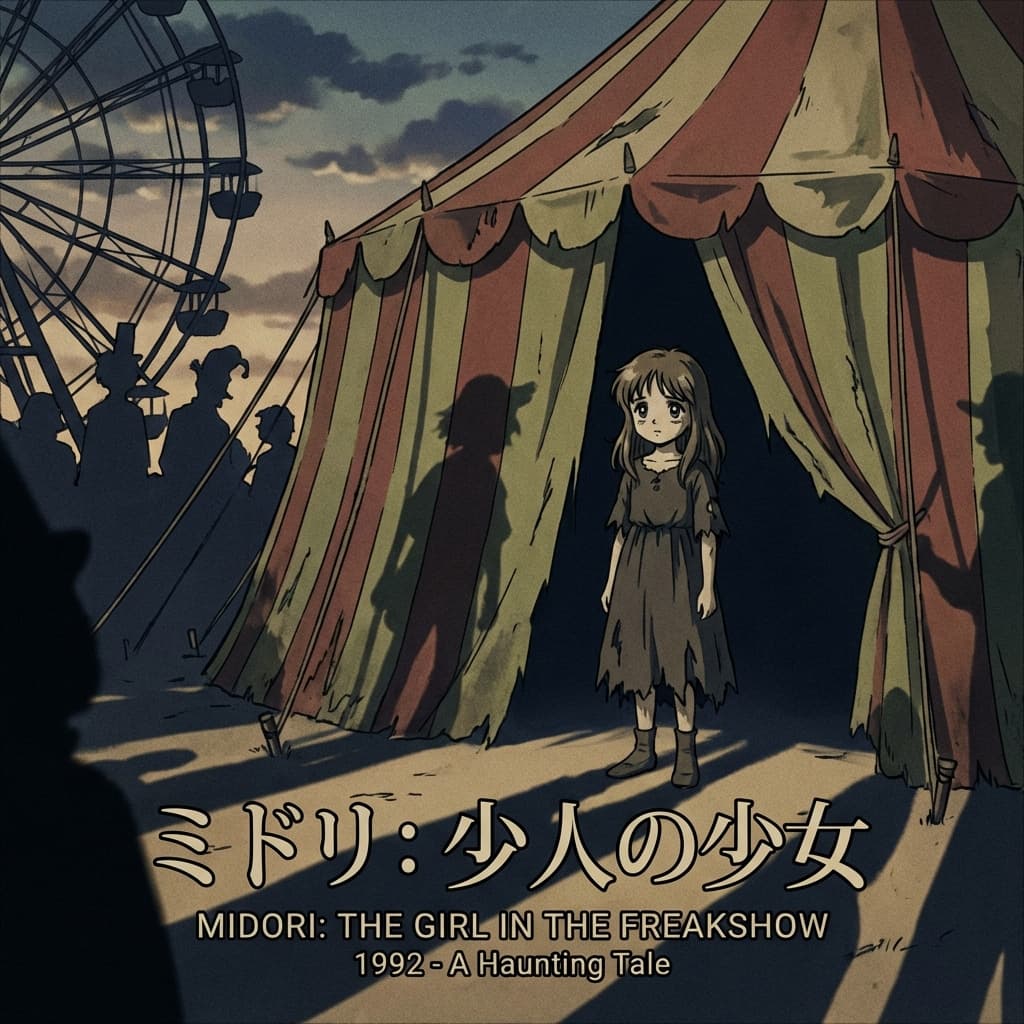
Midori: The Girl in the Freakshow (1992) - The Most Controversial Anime Ever Made
Table of Contents
Explore the disturbing world of Midori: The Girl in the Freakshow, the 1992 film that shocked audiences and remains one of anime's most controversial works. A deep dive into its creation, themes, and legacy.
Anime Actua Team
Verified ExpertJapanese Language Specialist (JLPT N2) | Manga Critic since 2018 | 10,000+ Translations Reviewed
Published: 2026-01-11
View Credentials & Review Process →There are anime that push boundaries, and then there's Midori: The Girl in the Freakshow (少女椿, Shoujo Tsubaki), the 1992 film that didn't just cross the line—it obliterated it. Banned in multiple countries, condemned by critics, and created almost entirely by one man over five years, this is the story of anime's most notorious and disturbing work.
What is Midori: The Girl in the Freakshow?
Midori: The Girl in the Freakshow is a 1992 independent anime film directed, animated, and produced almost single-handedly by Hiroshi Harada. Based on the manga Shoujo Tsubaki by Suehiro Maruo, the film tells the story of Midori, a young orphan girl who is forced to join a traveling freak show where she endures unimaginable abuse and degradation.
The film is infamous for its graphic depictions of violence, sexual abuse, and exploitation. It's not entertainment in the traditional sense—it's a visceral, nightmarish experience that leaves viewers shaken. Yet beneath the shock value lies a powerful commentary on cruelty, innocence, and the darkest corners of human nature.
The Plot: A Descent into Hell
Midori is a young girl selling flowers on the streets to support her dying mother. After her mother's death, she's left alone and vulnerable. A mysterious man lures her to join a traveling freak show, promising safety and a new family.
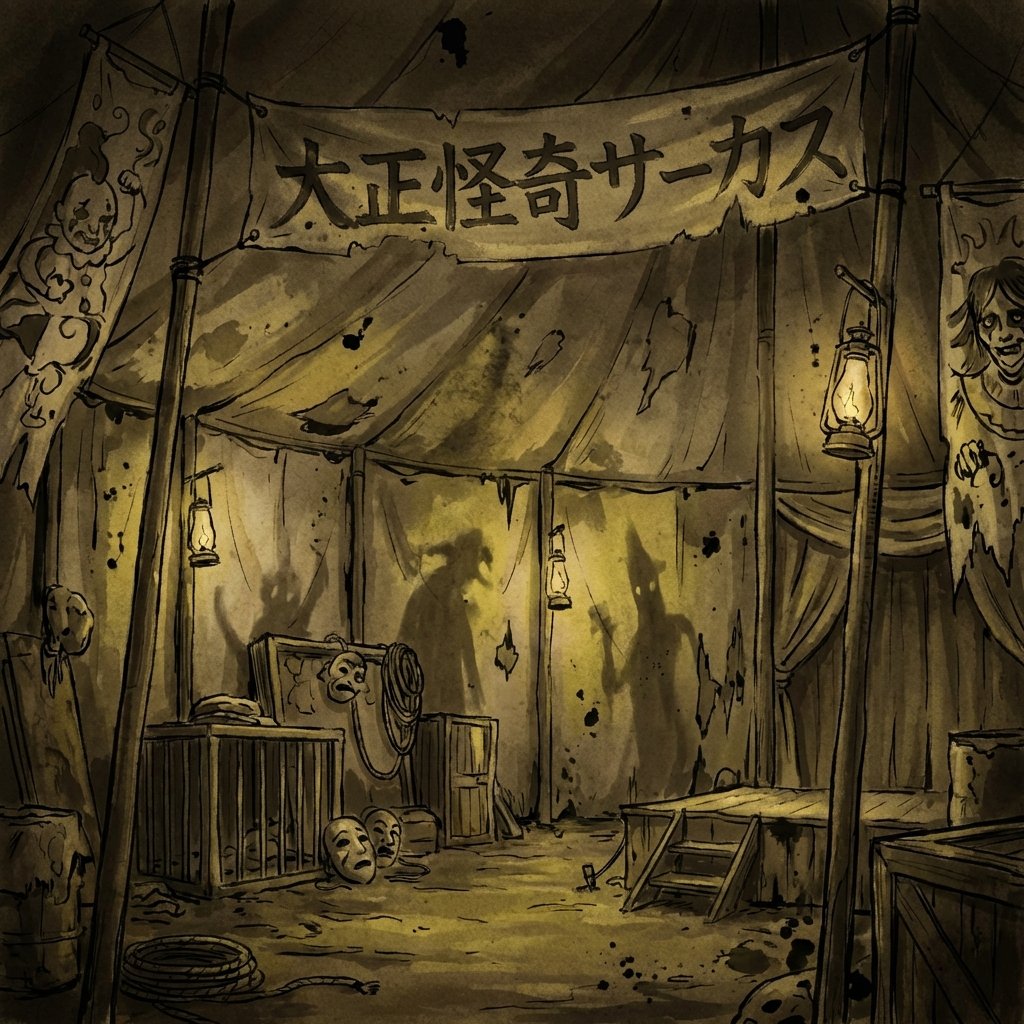
Instead, she finds herself trapped in a world of grotesque performers and sadistic ringmasters. The freaks—people with physical deformities and disabilities—are themselves victims of society's cruelty, but they turn that cruelty onto Midori, the weakest among them.
She's subjected to:
- Physical and sexual abuse
- Forced to perform degrading acts
- Humiliated and tortured for the entertainment of the troupe
Her only escape comes in the form of Wonder Masamitsu, a mysterious magician with supernatural powers who joins the troupe. He becomes obsessed with Midori, and while he protects her from the others, his "love" is possessive and disturbing in its own right.
The film doesn't offer redemption or hope. It's a relentless portrayal of suffering, with Midori trapped in a cycle of abuse with no clear way out.
The Creation: One Man's Obsession
What makes Midori even more remarkable is that it was created almost entirely by Hiroshi Harada working alone in his apartment. Over the course of five years, he hand-drew nearly every frame, composed the music, and handled the production.
The Animation Process
Harada used a technique called paper animation, where he drew each frame on paper and photographed it. The result is a crude, unsettling visual style that enhances the film's nightmarish quality. The animation is intentionally rough, with jerky movements and distorted character designs that add to the sense of unease.
The color palette is dominated by sickly yellows, reds, and browns, creating a perpetually diseased and decaying atmosphere. Nothing in the film feels clean or safe.
The Soundtrack
Harada also composed the film's haunting soundtrack, which features discordant melodies, eerie circus music, and unsettling sound effects. The music is as much a character as Midori herself, amplifying the horror and despair.
The Controversy
Upon its limited release in 1992, Midori was met with immediate backlash. It was:
- Banned in Japan shortly after release
- Banned in multiple countries including parts of Europe
- Condemned by critics for its graphic content
- Destroyed by the director himself, who reportedly burned the master negatives in response to the controversy
For years, the film was considered lost, existing only in bootleg VHS copies traded among collectors. It wasn't until the 2000s that a restored version surfaced, allowing new audiences to experience (and be horrified by) Harada's vision.
Themes and Symbolism
The Exploitation of Innocence
At its core, Midori is about the destruction of innocence. Midori represents purity in a world that seeks to corrupt and destroy it. The freak show is a microcosm of society—those who are marginalized and abused often turn their pain onto those even weaker than themselves.
The Cycle of Abuse
The freaks in the show are victims themselves, cast out by society for their differences. But instead of showing compassion to Midori, they perpetuate the cycle of abuse. The film suggests that cruelty begets cruelty, and that suffering doesn't automatically create empathy.
The Illusion of Rescue
Wonder Masamitsu appears to be Midori's savior, but his "love" is possessive and controlling. He doesn't free her—he simply becomes her new captor. The film challenges the idea of the "white knight" rescuer, suggesting that power dynamics in relationships can be just as exploitative as outright abuse.
Ero Guro Nansensu
Midori is a prime example of Ero Guro Nansensu (エログロナンセンス), a Japanese artistic movement that combines eroticism, grotesqueness, and nonsense. Originating in the 1920s and 1930s, Ero Guro explores the darker aspects of human nature through shocking and transgressive imagery.
Suehiro Maruo, the manga's creator, is a master of this genre, and Harada's adaptation faithfully captures the disturbing beauty and horror that defines Ero Guro.
The Legacy of Midori
Cult Status
Despite (or perhaps because of) its controversy, Midori has achieved cult status among anime fans and horror enthusiasts. It's often cited as one of the most disturbing films ever made, animated or otherwise.
Influence on Horror Anime
The film's unflinching approach to dark subject matter paved the way for other boundary-pushing works like:
- Perfect Blue (1997) - Satoshi Kon's psychological thriller
- Belladonna of Sadness (1973) - Another controversial anime exploring sexual violence
- Genocyber (1994) - Extreme violence and body horror
Academic Interest
Film scholars and cultural critics have analyzed Midori as a commentary on:
- The exploitation of marginalized communities
- The commodification of suffering
- The intersection of art and obscenity
- The limits of free expression
Should You Watch It?
Midori: The Girl in the Freakshow is not for everyone. In fact, it's not for most people. The graphic content is genuinely disturbing, and the film offers no catharsis or relief from its relentless bleakness.
Watch it if:
- You're interested in the history of controversial cinema
- You appreciate avant-garde and experimental animation
- You're studying Ero Guro or Japanese counterculture
- You have a strong stomach and can separate art from content
Avoid it if:
- You're sensitive to depictions of child abuse
- You prefer narratives with hope or redemption
- You're looking for traditional anime entertainment
- You're easily disturbed by graphic violence and sexual content
Where to Find It
Due to its banned status, Midori is difficult to find through legal channels. It's not available on mainstream streaming platforms. Some specialty distributors and film festivals occasionally screen restored versions.
Note: If you do seek out the film, be prepared for what you're about to watch. This is not a casual viewing experience.
The Artistic Debate
The central question surrounding Midori is whether its artistic merit justifies its disturbing content. Supporters argue that:
- It's a powerful critique of societal cruelty
- The grotesque imagery serves a thematic purpose
- Censorship of art, no matter how disturbing, is dangerous
Critics counter that:
- The graphic depictions of child abuse cross ethical lines
- Shock value doesn't equal artistic value
- Some subjects should not be depicted, regardless of intent
There's no easy answer. Midori exists in the uncomfortable space where art, exploitation, and free expression collide.
Conclusion
Midori: The Girl in the Freakshow is a film that demands to be reckoned with. It's a testament to one man's obsessive vision, a disturbing exploration of human cruelty, and a work that continues to provoke debate decades after its creation.
Whether you view it as a masterpiece of transgressive art or an exploitative exercise in shock, there's no denying its impact. It remains one of anime's most controversial works—a film that pushes the medium to its absolute limits and forces us to confront the darkest aspects of storytelling.
Midori is not entertainment. It's an experience—one that will haunt you long after the credits roll.
Expert writer on Japanese culture and anime trends.